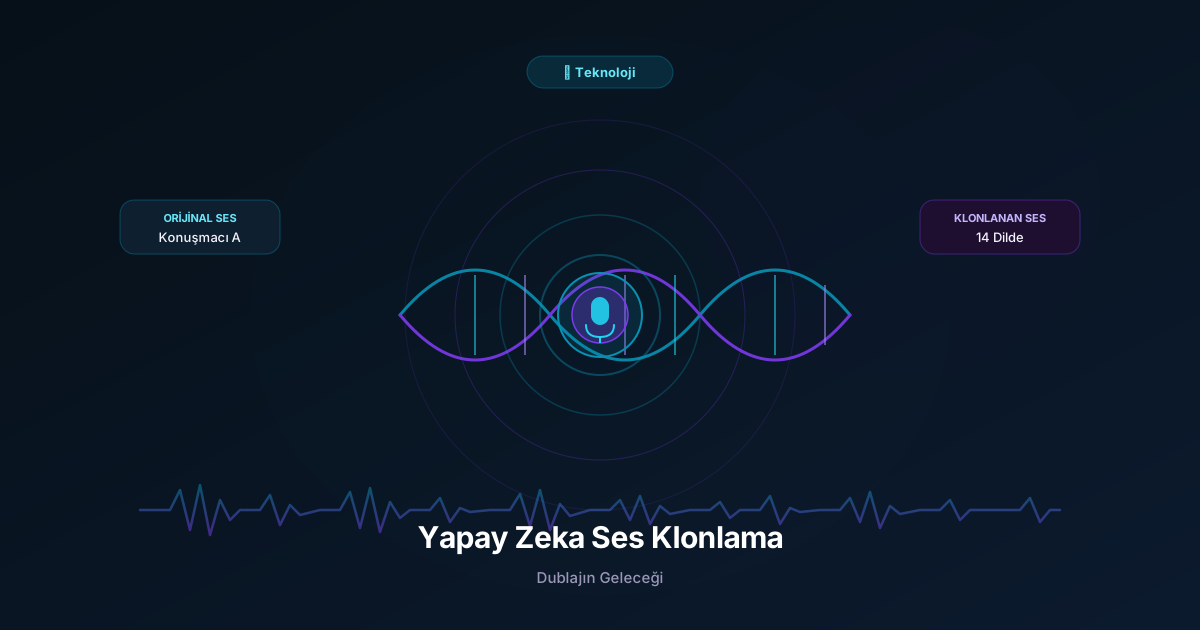
AI Voice Cloning: The Future of Dubbing
Voice cloning technology has advanced at a remarkable pace over the last two years. Models that can work with just a few seconds of audio are now available commercially. But how does this technology actually work?
Core Concepts
Speaker Embedding: The process of converting a speaker's voice into a mathematical vector. This vector encodes hundreds of parameters including vocal tone, speed, breathing patterns, and articulation.
Neural TTS: Unlike traditional formant-based synthesis, deep learning models generate the audio waveform sample by sample. The result is far more natural and expressive.
Zero-shot Cloning: The ability to clone a voice without retraining the model for that specific speaker. This works with just a few seconds of reference audio.
Chatterbox and Similar Models
Open-source models like Chatterbox — used in Spimov's infrastructure — allow emotional expression to be controlled through labels embedded in the text. Emotional tones such as happy, sad, excited, and calm can all be synthesized.
Ethics and Security
Voice cloning is a powerful tool and must be used responsibly:
- Cloning someone's voice without their consent can create legal problems in many countries.
- Spimov only processes audio from videos uploaded or authorized by the user.
- Watermarking and metadata standards for deepfake audio detection are being actively developed.
Where Are We Heading?
Real-time voice cloning and cross-lingual emotional transfer will become standard in the near future. Transferring the same emotional intensity of a sentence spoken in Spanish into Japanese with full fidelity is no longer a distant dream.
Try It Now
Dub your videos into 14 languages with AI in minutes. No credit card required.
Start Free