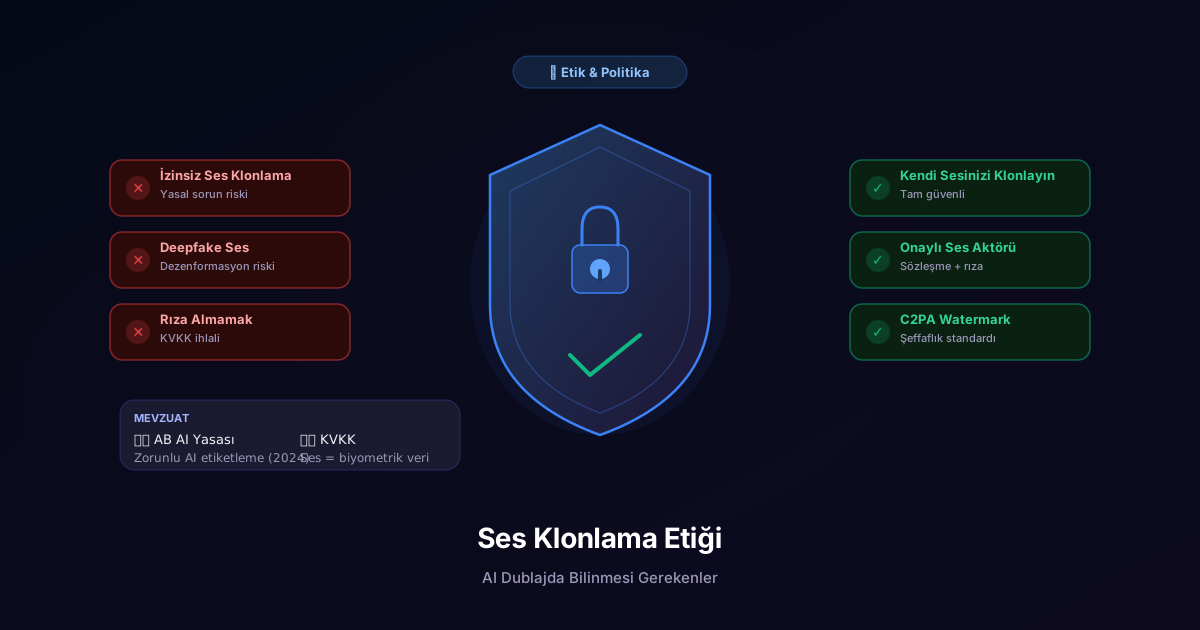
Voice Cloning Ethics: What You Need to Know About AI Dubbing
Voice cloning technology presents remarkable opportunities while simultaneously raising serious ethical questions. Everyone using this technology needs to be informed about their basic responsibilities.
The Legal Situation
While the legal framework has yet to fully crystallize, some principles are taking shape:
- EU AI Act (2024): Requires AI-generated content to be clearly labeled.
- US state laws: Tennessee, California, and many other states have passed laws protecting voice likeness rights.
- Turkey's KVKK: Voice is classified as biometric personal data; processing it may require explicit consent.
Consent: The Fundamental Principle
Cloning a person's voice requires their explicit, informed consent. "They signed a contract" isn't enough — the person must know for what purpose, for how long, and on which platforms their voice will be used.
Safe Use Cases
- Cloning your own voice
- Working with voice actors who have given their consent
- An employee's approved voice for corporate content
- Accessibility purposes (e.g., preserving the voice of someone with ALS)
Spimov's Approach
Spimov only processes content that the user has uploaded or has authorized access to. AI watermarks are embedded at the metadata level in all generated audio. A suspicious-use detection mechanism that freezes accounts is in place.
Looking Ahead
The C2PA (Content Credentials) standard is gaining traction. In the near future, all AI-generated audio is expected to be "signed" and traceable to its source — a standard that protects both users and artists.
Try It Now
Dub your videos into 14 languages with AI in minutes. No credit card required.
Start Free