Lip Sync Technology: Why Lip Synchronization Matters So Much
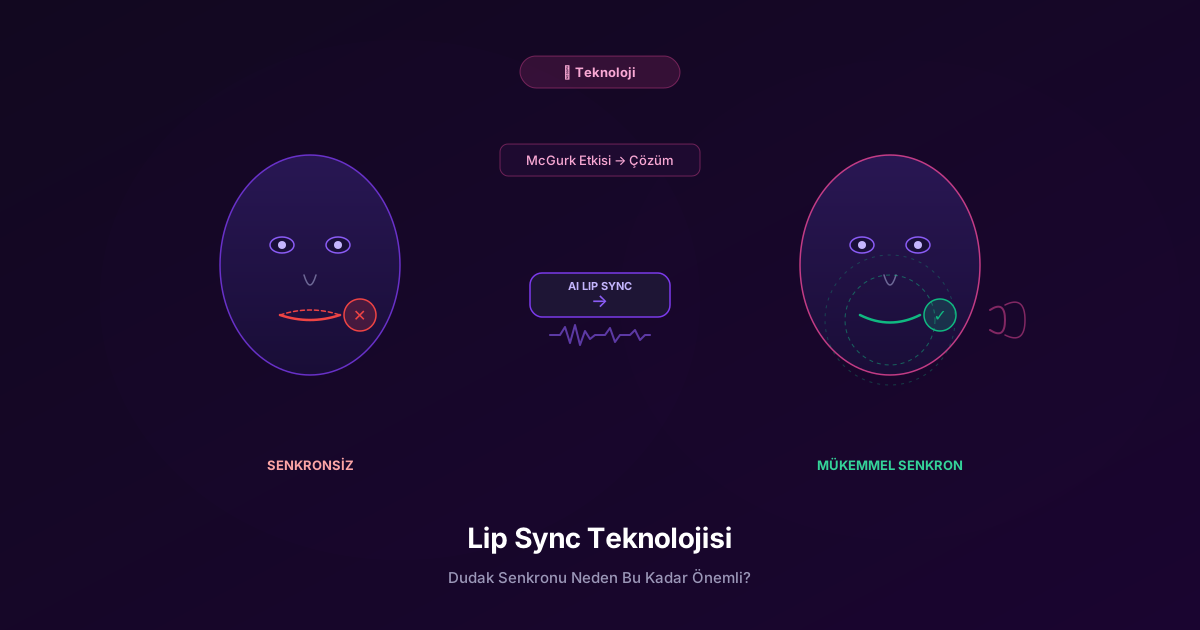
Remember old Godzilla movies? The lips kept moving after the audio had already finished — or vice versa. This "sync problem" creates a deep discomfort in viewers — neuroscience calls it the McGurk Effect.
What Is the McGurk Effect?
Discovered in 1976, this effect demonstrates that the brain processes audio and visual information simultaneously. When lip movements and audio don't align, the brain receives conflicting signals — and the viewer becomes unsure of what they're hearing.
The Sync Problem in Traditional Dubbing
A voice actor imitating the original audio must battle time constraints. A sentence ending "let me go" might be shorter in Spanish ("Déjame ir") or longer in German ("Lass mich gehen"). This difference may seem small, but it becomes obvious on screen.
How AI Lip Sync Works
Modern approaches use two different methods:
- Audio time-stretching/compression: Stretching or compressing the synthesized audio along the time axis. Fast, but can introduce quality loss.
- Face re-synthesis: Reshaping the speaker's lip and jaw region in the video frame. Models like LatentSync use this approach. The result is far more convincing but computationally heavy.
Real-World Use Cases
Netflix and Amazon Prime invest hundreds of millions of dollars in dubbing licensed content. AI lip sync has the potential to dramatically reduce this cost. It's available in beta on Spimov Pro plans.
Try It Now
Dub your videos into 14 languages with AI in minutes. No credit card required.
Start Free