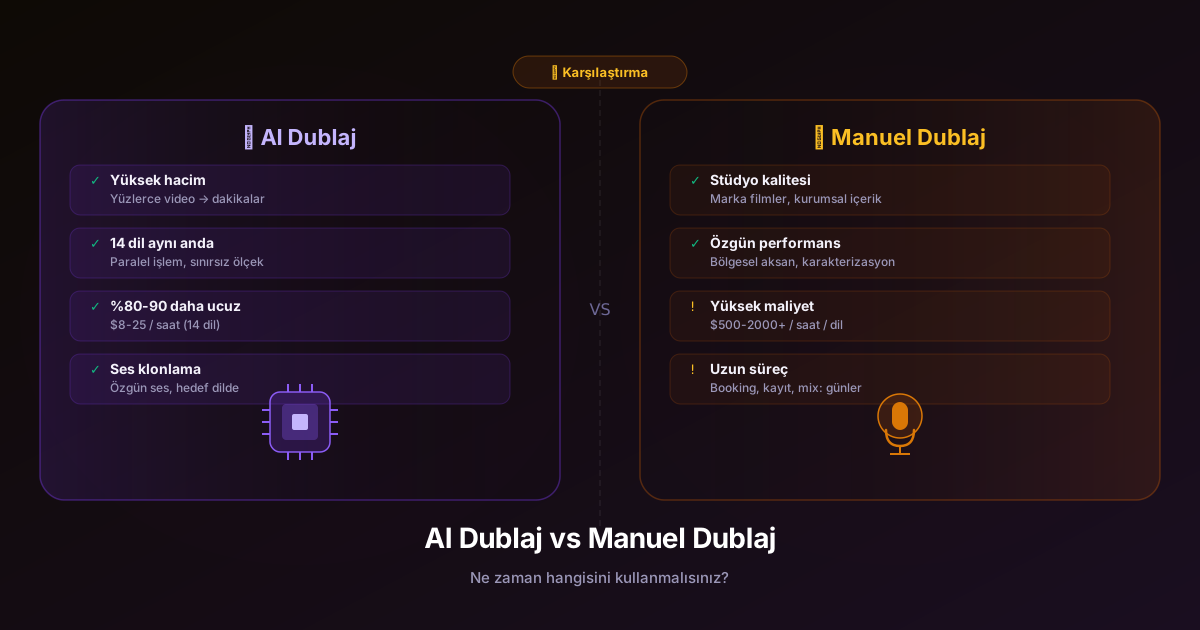
AI Dubbing vs Manual Dubbing: When to Use Which
AI dubbing now offers a genuine alternative to professional voice acting studios. But that doesn't mean "always use AI." Choosing the right tool requires understanding the context.
When Manual Dubbing Wins
- High-budget corporate films: If brand voice, voice actor personality, and studio quality matter, manual is the better choice.
- Older or children's audiences: These audiences have low tolerance for voice inconsistencies.
- Emotionally intense content: Therapeutic videos, bereavement narratives, crisis communications.
- Accented characters: Content requiring a specific regional accent.
When AI Dubbing Wins
- High volume, low budget: Studio costs for hundreds of videos are unsustainable.
- Speed is critical: Breaking news, product launches, and training content change rapidly.
- Many languages at once: Finding 14 separate voice actors for 14 languages is a logistical nightmare.
- Social media and short format: Viewer quality expectations are more forgiving.
- Preserving the original speaker's voice: Cloning produces a version of the original voice adapted to the target language.
The Hybrid Approach
Many production teams are adopting a hybrid model: AI generates the draft, voice actors step in for critical scenes, and final mixing happens in the studio. This approach cuts costs by 60–70% while keeping quality at a professional level.
Cost Comparison
Looking at average pricing:
- Manual dubbing: $500–$2,000+ per language for a one-hour video
- AI dubbing (Spimov): $8–$25 per language for a one-hour video
The math for 14 languages speaks for itself.
Try It Now
Dub your videos into 14 languages with AI in minutes. No credit card required.
Start Free