Content Localization in 2025: Trends and Predictions
The localization industry is undergoing a major transformation in 2025. The maturation of AI tools, intensifying streaming competition, and rising viewer expectations are fundamentally reshaping the sector.
Trend 1: Real-Time Localization
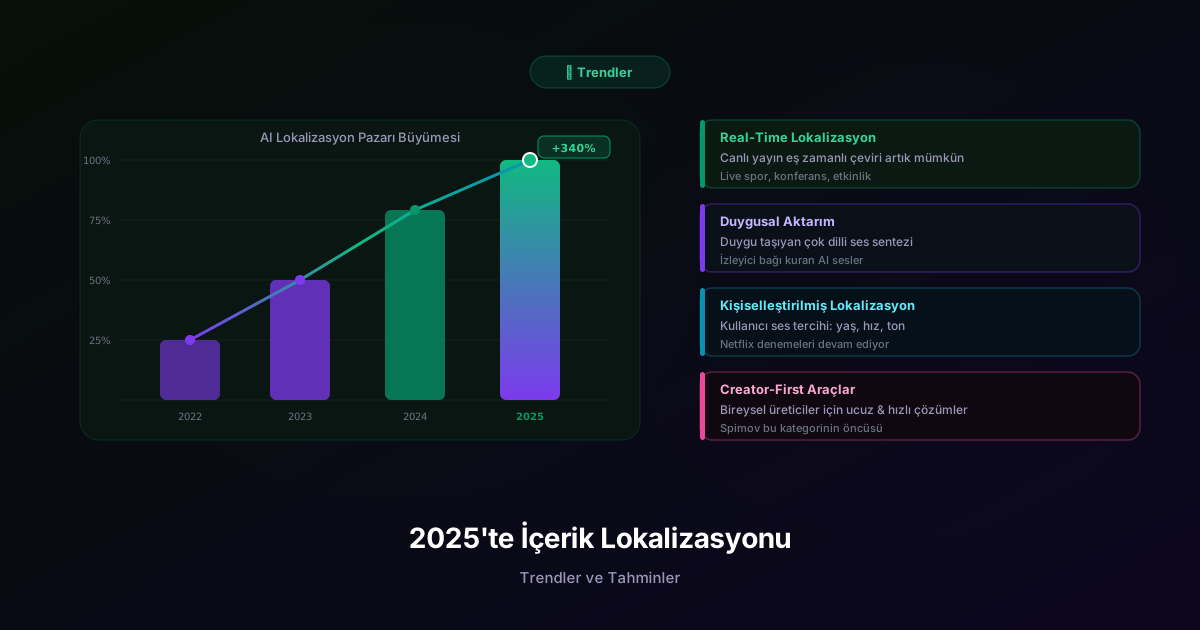
Translating live broadcasts into different languages in real time is now technically possible. Some major platforms are testing simultaneous AI dubbing for live sporting events. Widespread adoption is expected by the end of 2025.
Trend 2: Cross-Domain Emotional Transfer
Next-generation TTS models can now carry not just the voice but the speaker's emotional state into the target language. This increases the ability of AI voices — previously perceived as "robotic" — to build genuine connections with viewers.
Trend 3: Personalized Localization
In the near future, platform users will be able to choose their preferred voice-over style (formal/informal, slow/fast, young/old voice). Netflix is running experiments in this space.
Trend 4: Creator-First Tools
Instead of large studio tools, affordable and fast localization platforms aimed at individual content creators are growing rapidly. Spimov aims to be the pioneer of this category.
Trend 5: Localization Quality Metrics
The critical question is no longer just "was it translated?" but "how natural does it sound?" MOS (Mean Opinion Score) and automated naturalness scoring systems are becoming indispensable parts of localization QA processes.
Trend 6: Regulatory Pressure
New laws in the EU and US are imposing labeling requirements for AI-generated content. This is familiarizing both tech companies and content creators with compliance processes.
Conclusion
2025 will be a turning point for localization. While AI tools remain unquestionably superior in speed and scale, the sector needs to mature in quality and ethical dimensions. This maturity is both an opportunity and a responsibility.
Try It Now
Dub your videos into 14 languages with AI in minutes. No credit card required.
Start Free